Libar API 0.12: Address Search That Understands How Croatians Actually Write
Levabyt has released version 0.12 of Libar API, its REST API for validating and autocompleting Croatian and Slovenian addresses. The update introduces what we call “pametna pretraga” (smart search), a new endpoint that turns GPS coordinates into the nearest addresses, and a ranking model that puts the right result first far more often than before.
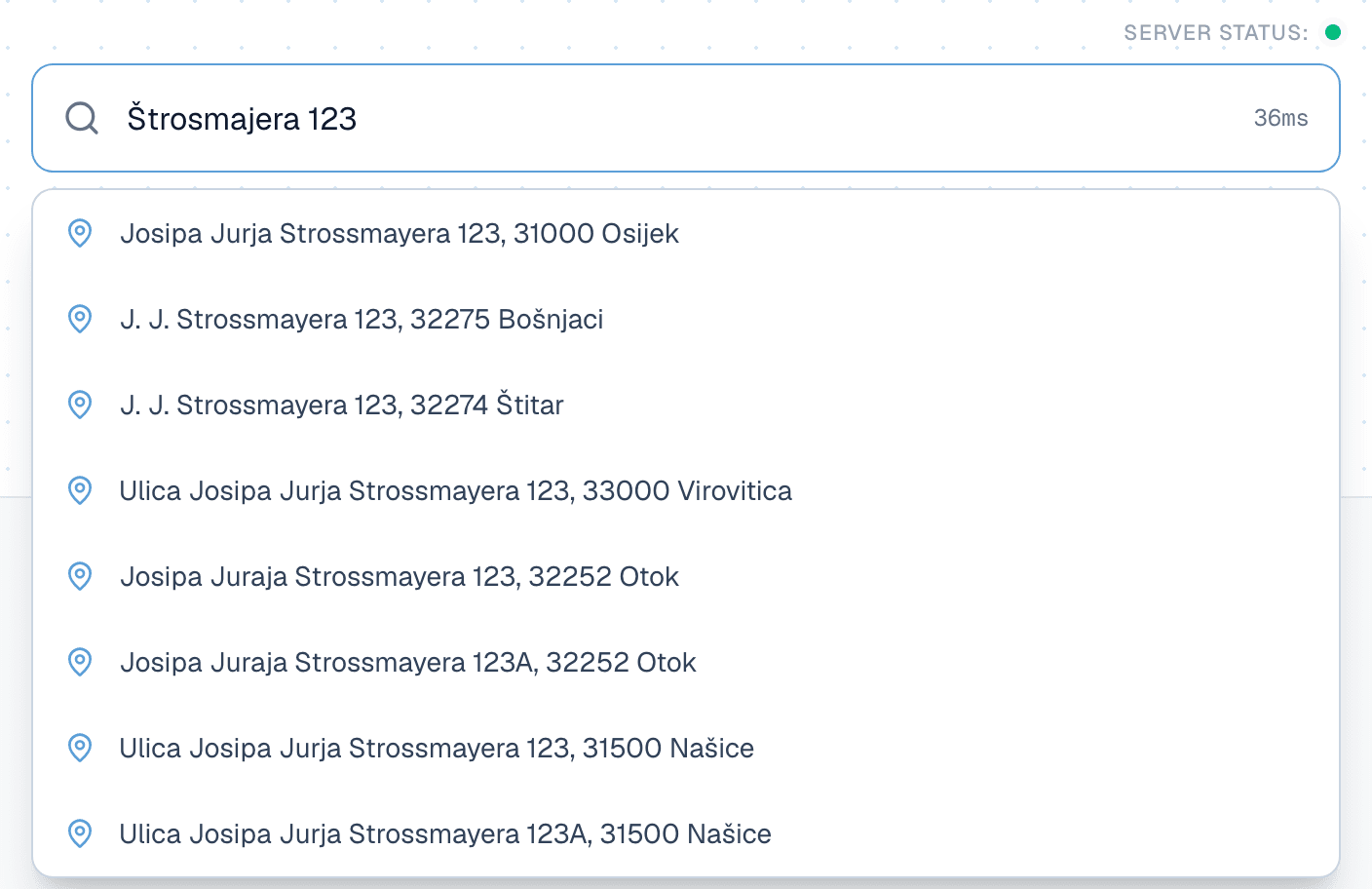
For teams that build e-commerce checkouts, delivery apps, CRM systems or public-sector forms, this release removes a whole category of support tickets: the customer who typed “Štrosmajerova 12” and got no results, even though the address exists.
What Libar API does
Libar API is a simple HTTP service that answers one question: is this a real address, and where exactly is it? Behind a single search endpoint sits the official register of the Croatian State Geodetic Administration (DGU): over 1.5 million addresses, 54,000 streets and 6,700 settlements, each with a building-level GPS coordinate. The same service also covers Slovenia from its official register, though the 0.12 features described below apply to Croatian addresses; Slovenian search will follow.
A developer sends a partial query such as “ilica 1 zagreb” and receives structured results with street, house number, settlement, postal code and postal office name, plus coordinates. Typical response time is under 60 milliseconds, which makes it fast enough for autocomplete on every keystroke. Integration usually takes minutes, not days, and the free plan includes 1,000 requests per month without a credit card.
We maintain the data. When the register changes, Libar API changes with it, so customers never run their own import jobs or chase updates.
Why this release matters
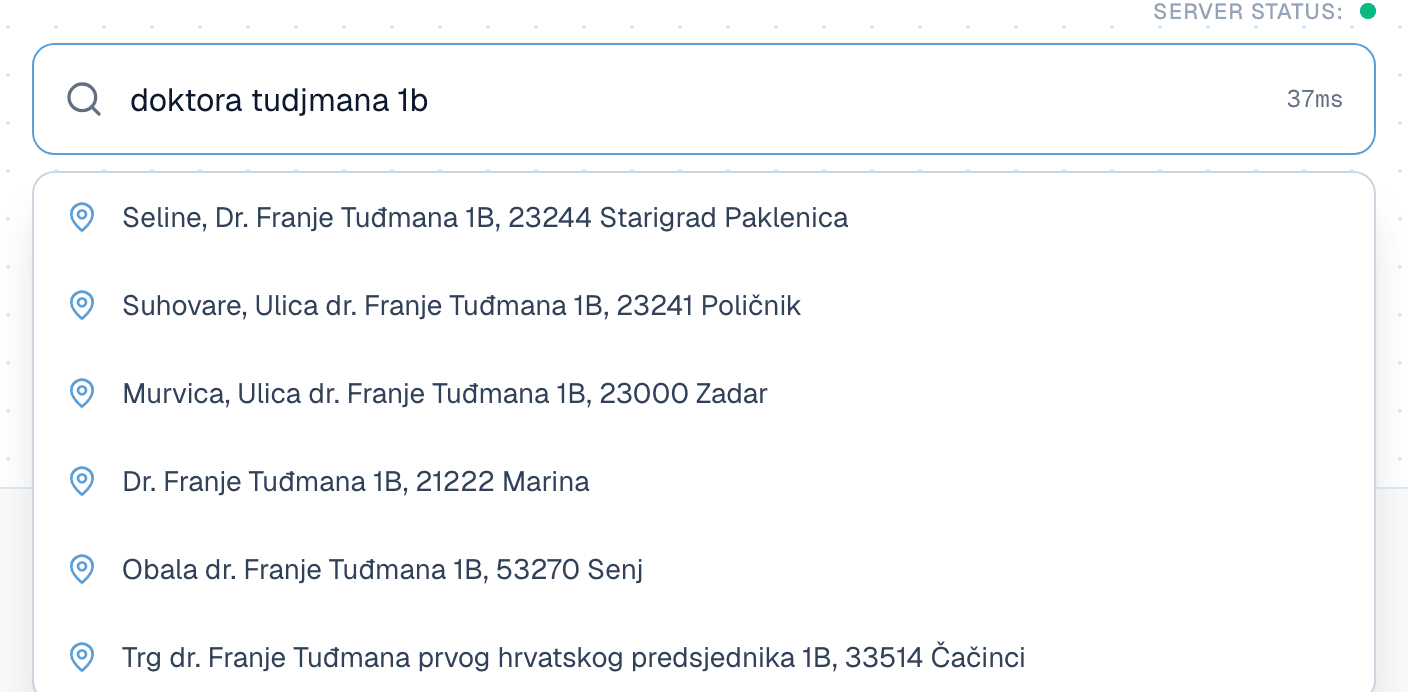
Address data in Croatia is precise, but people are not. They write “ul.” instead of “Ulica”, skip the “dr.” in a street name, use “Vukovarska” for “Ulica grada Vukovara” and type “Djurdjevac” on a keyboard that has no đ. Any search that expects the official spelling fails them, and the failure lands on the business as an abandoned cart or a wrong delivery.
Version 0.12 was built around that reality. Instead of asking users to know the official form, the API learns how the official form is actually spoken.
What is new in 0.12
Smart search. Words such as “ulica”, “ul.”, “dr.” and “prof.” can be typed or omitted. Abbreviations like “sv.”, “hrv.” and “odv.” work in both directions. Word order and diacritics no longer matter, so “sibenik” and “ilica zagreb” both resolve correctly. The rules are documented in full on the smart address search page.
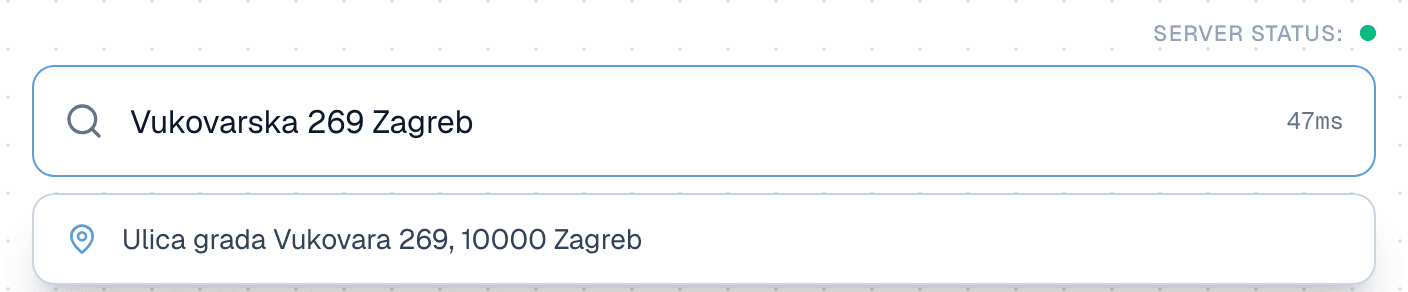
Everyday street names find official ones. More than 800 name families map the way people say a street to the way the register spells it. “Vukovarska” finds “Ulica grada Vukovara”; “Štrosmajerova” finds “Josipa Jurja Strossmayera”. Hyphenated names such as “Vlačić-Flacius” match with a hyphen, a space or just one part.
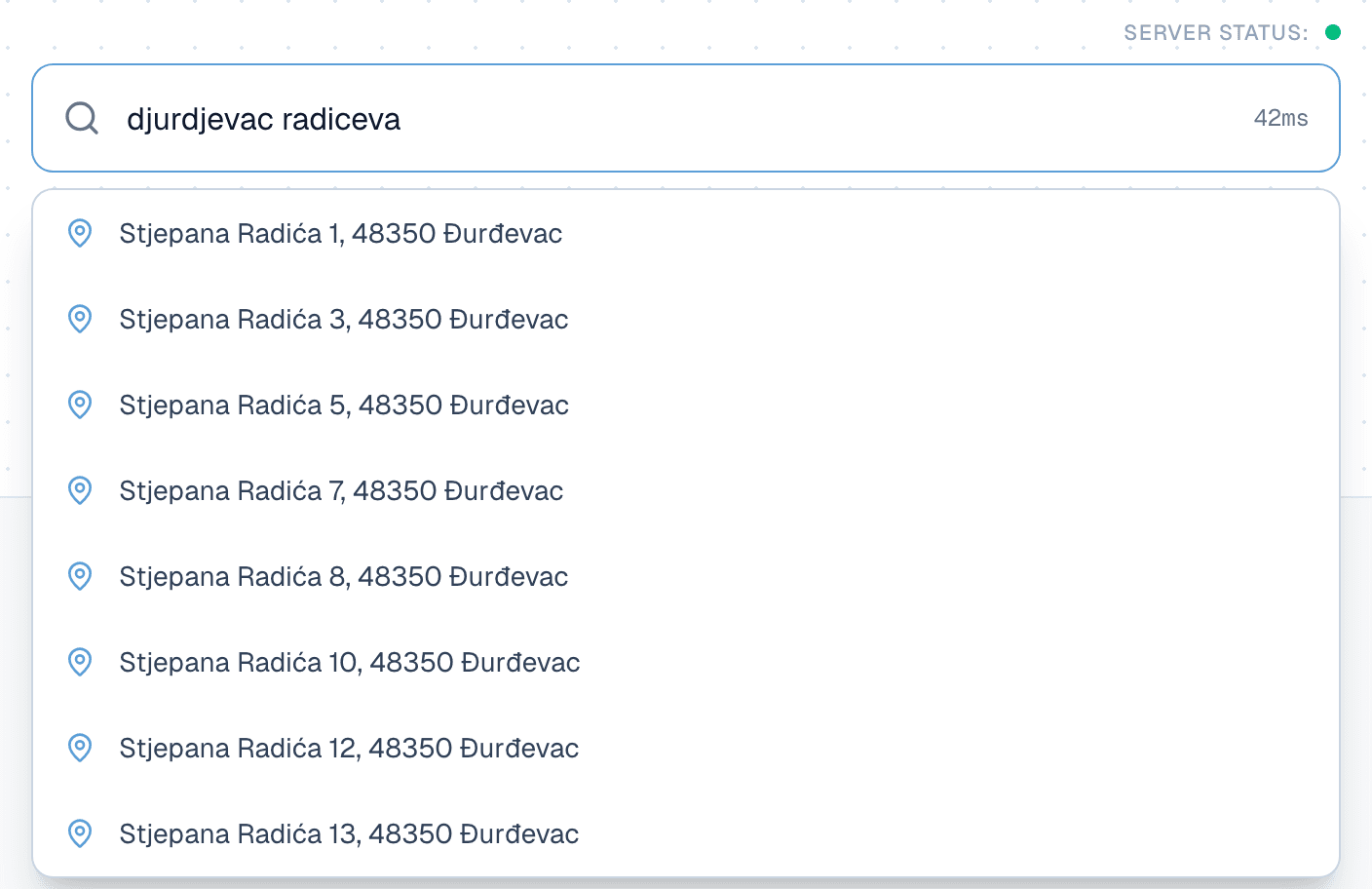
Đ and dj are the same letter. “Djurdjevac” finds Đurđevac, and the rule applies to streets, settlements and postal offices alike.
Coordinates to address. A new endpoint, /api/nearest, takes a GPS position and returns the three closest addresses with their distance in metres, postal code, settlement and coordinates. It is the “Where am I?” button for a mobile app, a delivery confirmation step, or an automatic form fill from the device location.
Better ranking. Larger streets appear first and an exact house number ranks above its sub-numbers, so the first result is, as a rule, the one the user meant.
Both coordinate systems on every address. Each result now carries WGS84 (lat, lon) and EPSG:3035 (x, y), which removes a conversion step for GIS and logistics integrations.
The full list of changes is kept on the public Libar API changelog.
Croatian-first by design
Croatian addresses have a strict structure that international geocoders handle poorly: a settlement that in more than half of all cases differs from the name of the postal office, house numbers with up to three suffixes, and streets that cross several postal zones. We wrote a guide to the Croatian address format for developers who meet these rules for the first time, and Libar API enforces them so the application does not have to.
That is the same approach Levabyt takes with Lexa, its legal SaaS: build for the local market from the ground up rather than localise a generic product afterwards.
Try it
Libar API 0.12 is live for all customers, existing integrations continue to work unchanged, and the new behaviour applies to every Croatian address search automatically. Developers can test the smart search in the live demo and start with the free plan at libarapi.com.